Spotlighting the IGPOTY Plants & Planet category winners: an interview with Uwe Beutnagel–Buchner

As part of Penningtons Manches Cooper’s continued sponsorship of the International Garden Photographer of the Year (IGPOTY), we are proud to spotlight some of the talented photographers featured in this year’s competition. This new series explores their inspirations and creative perspectives, offering a deeper insight into the stories behind their images.
In the final instalment of this interview series, Uwe Beutnagel-Buchner reflects on his striking photograph taken in the Death Valley, capturing the unexpected beauty of a moment that unfolded almost by accident. He recalls how a vivid sunset and the presence of a solitary Joshua tree inspired him to stop and respond instinctively with his camera.
Uwe discusses the environmental ideas and influences that shape his work and offers a thoughtful view into the value of untouched landscapes, the emotional power of imagery, and the role photography can play in helping us recognise the importance of protecting the natural world.
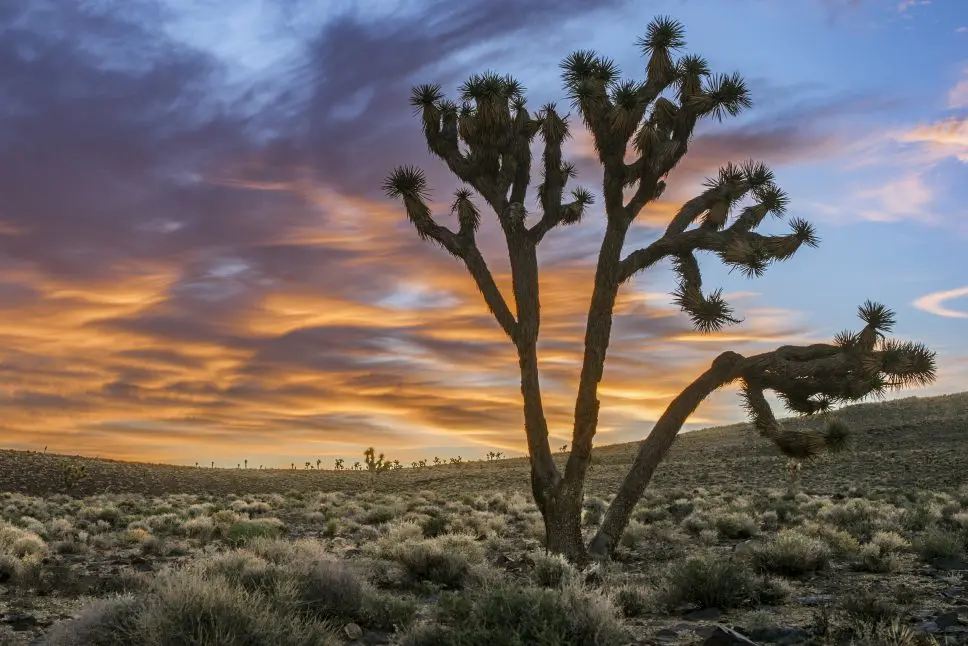
What inspired you to capture this image?
“I took this image in Death Valley in the USA. I was there to photograph the Mesquite Flat Sand Dunes and the geological formations in the canyons.
“One evening, whilst driving back to my accommodation, I suddenly caught sight of the scene pictured here out of the corner of my eye. My mind was still so focused on the dune landscape that the sight of the scattered Joshua trees against the evening sky struck me like a thunderbolt. I hadn’t seen anything so beautiful in a long time and it came completely out of the blue.
“I knew immediately that I didn’t have much time left with this sunset. I stopped straight away, grabbed my camera, and looked for a suitable spot to capture my impression as well as possible.”
What do you hope people notice first when they see your photograph?
“I hope people will wonder how long it might have taken for this Joshua tree to grow so majestic in such a harsh environment.”
Is there a small detail in the image that people might overlook?
“At first glance, the Joshua tree looks very imposing. In contrast, however, its leaves appear delicate, fragile and very slender.”
Describe your photo in three words
“Nature will survive.”
Why do you think the Plants & Planet theme matters today?
“I believe that Anthony Huxley, in his book Plant and Planet, anticipated the consequences of climate change as early as the mid‑1970s. The observations he makes in the final chapters may have been influenced by the Club of Rome, founded in 1968, which published The Limits to Growth in 1972. In my view, despite these early warnings, there has been little meaningful progress since then in protecting our climate.
“The effects of climate change have now become visible to many people, and in some cases, are sadly very painful. Perhaps the impact on each of us can generate increasing pressure at a political level to ensure that more is done to protect our climate.
“My hope is that the Plants & Planet theme, through its powerful images, will raise awareness among even more people of just how beautiful and fragile our planet is.”
How do you think photography can help people reconnect with the environment?
“I believe in the saying, ‘a picture is worth a thousand words’. That belief is one of the reasons I take photographs. When imagery successfully connects the natural environment with human emotion, it can inspire deeper understanding and care. In my view, powerful images are especially effective in fostering environmental awareness.”
Who or what has influenced your photographic style the most?
“Discovering and exploring ‘untouched nature’ has had a major influence on my photography. This ranges from geological formations on coastlines, canyons and mountains to native flora and ancient woodland. For example, my latest project is a book about ‘Scotland’s native woodland’.
“My role models are many nature and landscape photographers, particularly those from the mid‑20th century, such as Ansel Adams and Eliot Porter.”
If you could photograph anywhere on the planet, where would you choose and why?
“I am always on the lookout for untouched natural landscapes and seek to bring them closer to people through my photography, in the spirit of Plants & Planet. However, to avoid creating an excessive ecological footprint through long‑distance travel, I limit my work to Europe and the Arctic, where I can usually reach my favourite landscapes by car or boat.”
Find out more about the competition by visiting the IGPOTY website.